
Editorial content from Empório Portugal. Traditional recipes may vary by region, family and cook.
About the recipe
Castanhas doces mark the Portuguese autumn, especially around São Martinho, when chestnuts and new wine take centre stage at the table.
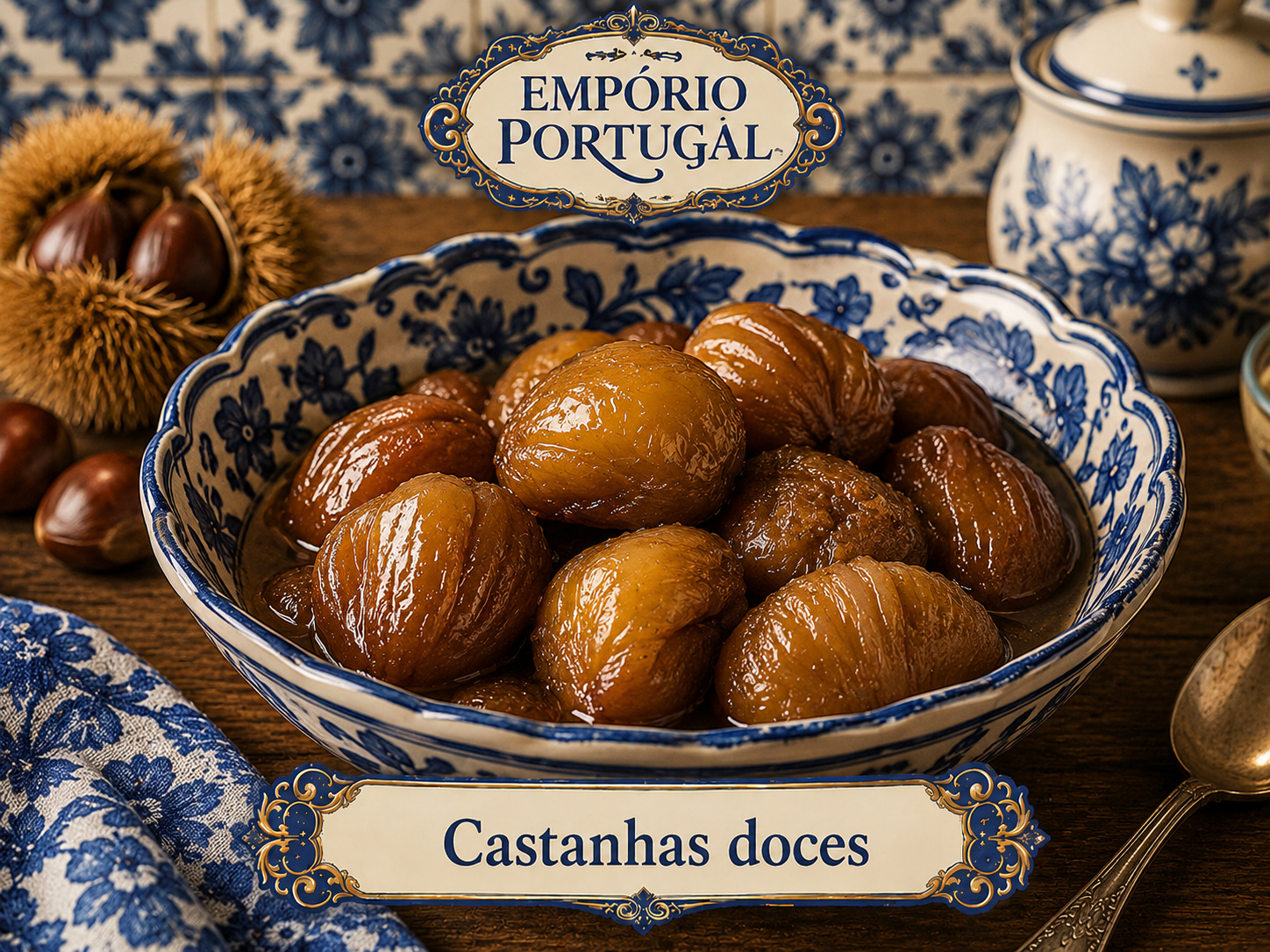
The recipe combines chestnuts cooked in a sugar syrup, often scented with cinnamon, anise or lemon peel, until soft and glossy.
As with many Portuguese recipes, there are variations by region, family and cook — some versions drier, others more syrupy.
Ingredients
- 500 g fresh chestnuts
- 300 g sugar
- 400 ml water
- 1 cinnamon stick
- 2 cloves
- Zest of half a lemon
- 1 pinch of salt
Method
- Lightly score each chestnut on the rounded side to keep it from bursting while cooking.
- Place the chestnuts in cold water, bring to the heat and cook for about 10 minutes after boiling.
- Drain and remove the shell and inner skin while still hot.
- In a wide pan, dissolve the sugar in the water with cinnamon, cloves, lemon and salt.
- Add the cleaned chestnuts and cook over a gentle heat, stirring now and then, until the syrup thickens and the chestnuts are soft.
- Take off the heat and leave to cool in the syrup so they absorb the aroma.
- Serve warm or at room temperature, with syrup on top.
Tips from Empório Portugal
- Fresh autumn chestnuts give better texture than very dry ones.
- Boiling first makes peeling easier and shortens time in the syrup.
- Modest portions work well as a snack or end of meal.
Possible replacements in Brazil
- Frozen peeled chestnuts can be used out of season, with a timing adjustment.
- Star anise can replace the cloves in more fragrant versions.
Pairing
Young red wine or São Martinho jeropiga, for adults, in moderation. Also pairs with black tea or coffee. Content intended for adults over 18. Drink in moderation.
Regional and family variations can alter ingredients, quantities and preparation.
Empório Portugal's recipes have cultural and gastronomic purposes. Adjust ingredients according to dietary restrictions, allergies and professional guidelines.
This recipe is part of the editorial curation of Empório Portugal, developed from the Portuguese culinary tradition. Like any traditional recipe, it can vary depending on the region, the family and the cook.
Send it to the Empório Portugal community. The recipes received are analyzed before any publication.
Send my recipe